
How hunting works in Warrior Cats: Clans of the Forest, which prey the game documents, and how to turn travel routes into a steady material supply.
Warrior Cats Hunting Guide: Prey, Routes and Materials
Hunting in Warrior Cats: Clans of the Forest is not a minigame you open from a menu. It sits in the world layer alongside foraging and crafting: you find prey while moving through the Lake Territories, and the materials you get feed the crafting system that supports your Clan.
The game documents three prey animals - birds, rabbits and squirrels - and treats hunting as a second material source next to foraging. Beyond that, the official material is thin. There is no published prey table, no spawn map and no yield numbers, so this guide sticks to what the game shows you and to the routing habits that make hunting pay.
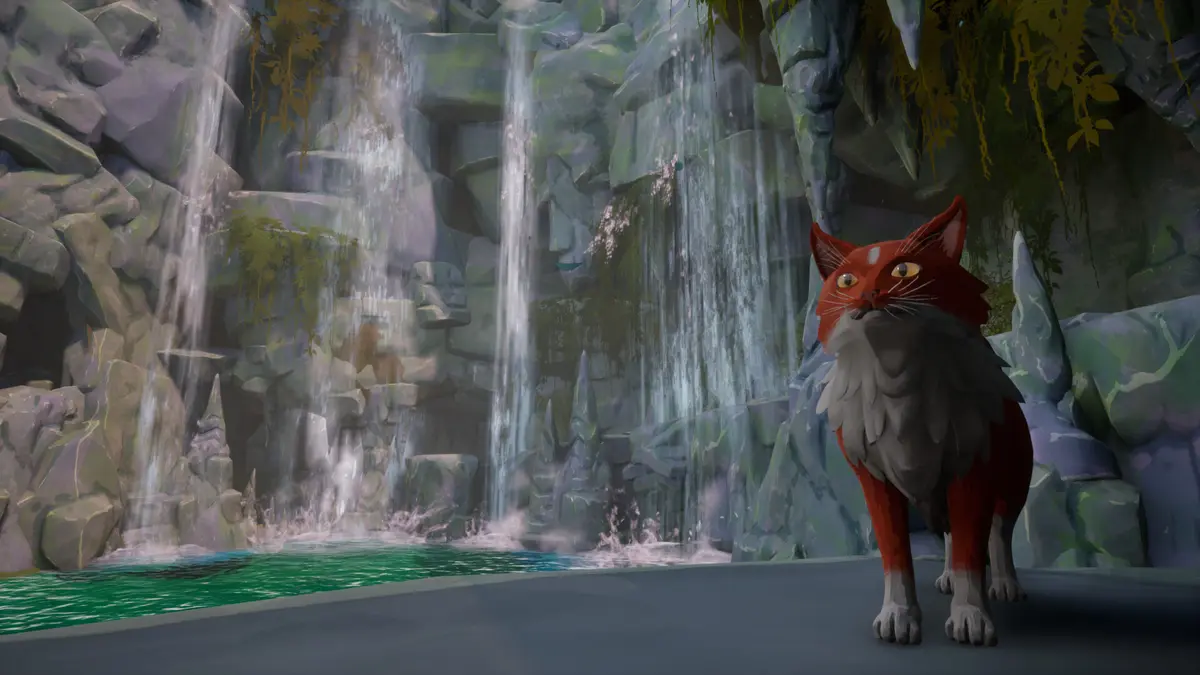
Hunt on the way to objectives rather than making dedicated trips. Prey is scattered across the routes you already travel, and the material value compounds with foraging and puzzles rather than replacing them.
What hunting actually gives you
The store description and the in-game world layer place hunting next to two other activities: foraging for materials and crafting den items. The useful mental model is a triangle:
| Activity | What it feeds | When it matters |
|---|---|---|
| Hunting | Prey materials | Early, and whenever a recipe asks for animal parts |
| Foraging | Plant materials | Constantly, because herbs and plants are the base of most recipes |
| Crafting | Den items and upgrades | Whenever you have enough of both |
None of the three is optional if you want to keep pace with the later chapters. The beginner guide covers the first pass through this loop, and the core loop page explains how the three activities interlock across a campaign.
Where to hunt
Prey appears across the Lake Territories, and the practical answer to "where" is: on the route between two objectives. The game is generous with encounters while you travel and stingy if you stand still.
Three routing habits make the difference:
- Take the long way once. The first time you cross a territory, follow the terrain rather than the marker. You will pass more prey, more herb nodes and more environmental puzzles.
- Sweep edges, not centres. Territory borders, water lines and tree cover are where the game places world-layer content. Cutting straight through open ground is the fastest route and the emptiest one.
- Return the way you came. The world repopulates as you progress, and a return trip through a cleared route still produces encounters.
The map and locations page breaks the Lake Territories down by Clan, which is the better starting point if you are still learning the geography.
Hunting and herbs are the same trip
Herb gathering is the other half of the material economy, and the two overlap in practice: the same routes that produce prey produce herbs. If you are following the herb guide for a recipe, take the hunting route rather than a direct path to the herb spot.
That is not just efficiency. Crafting in Clans of the Forest consumes both animal and plant materials, so a player who only forages ends up short on the animal side and a player who only hunts ends up short on the plant side. Balanced routes prevent both.
Does hunting affect combat?
Indirectly, and that is the point. The materials from hunting and foraging become den items and crafting outputs, and those are what carry you through the later campaign chapters and the survival mode. There is no separate "hunting level" that changes your damage.
What hunting does not do is replace combat encounters. Birds, rabbits and squirrels are prey, not enemies - the combat system's 3v3 turn-based fights are a separate layer with their own 75 moves and stance system. Mixing the two up is the most common confusion in guides that describe "hunting enemies".
Survival mode hunting
The roguelike survival mode changes the value of hunting, because runs are longer and resources do not reset between fights. In a campaign you can afford to skip a prey trail and come back later; in survival, every skipped route is a crafting material you will not see again in that run.
The practical rule for survival: hunt everything on the path, and never detour backwards for a single node. Time spent backtracking is time the run does not give back.
What the game does not tell you
Several numbers that guides usually quote are not published anywhere official:
- Prey yield per animal. The game does not list how much material each prey type produces, and community figures vary by recipe.
- Spawn timers. There is no documented respawn interval. Anecdotally, routes refill as you progress through the story, but the studio has not explained the rule.
- Rarity by territory. No official table ties specific prey to specific Clans.
Where a guide gives you a hard number for any of these, it is an estimate. Treat "not documented" as the honest answer and plan routes rather than optimise yields.
A sample route
If you want a routine that works in any chapter:
- Pick the objective you were going to do anyway.
- Choose the route with the most terrain variety - water, tree line, border.
- Hunt every prey encounter on the way, and take every herb node you pass.
- Solve environmental puzzles you find rather than marking them for later.
- Bank materials before the next story beat rather than after it.
That is the whole system. It is not complicated, and the game rewards consistency more than optimisation.
FAQ
What animals can you hunt in Warrior Cats: Clans of the Forest?
The game documents birds, rabbits and squirrels as prey. They are world-layer animals, not combat enemies.
Is hunting required?
It is one of the two documented material sources alongside foraging, and crafting depends on both. Skipping it leaves you short on recipes rather than blocking progress outright.
Can you hunt in the survival mode?
Yes. The survival mode uses the same world layer, and materials matter more there because runs are longer.
Does hunting give experience?
The game does not publish a hunting XP system. Progression is tied to the campaign and combat rather than to a gathering skill.
Where do I find prey?
Along routes between objectives, particularly near borders, water and tree cover. There is no official spawn map.
Related Guides
- Beginner guide - the first hour explained
- Map and locations - the Lake Territories by Clan
- Herb guide - the plant half of the material economy
- Gameplay and core loop - how the layers connect
Sources
More Warrior Cats: Clans of the Forest Guides
The common Warrior Cats: Clans of the Forest mistakes: ignoring Stances, hoarding StarClan moves, skipping herbs and expecting an action RPG.
Clan choice decides which campaign you play in Clans of the Forest. What each of the four Clans offers, why there is no stat tier list, and who each suits.
Every Warrior Cats book in reading order: nine story arcs, 52 main-series novels, plus Super Editions and manga, as listed by the publisher.
There is no published list of Clans of the Forest endings. What the four campaigns conclude, why procedural generation changes the answer, and how to see each.
How to save in Warrior Cats Clans of the Forest: the pause-menu exit method, outposts, Steam Cloud, save location and backup steps.
A practical Warrior Cats Clans of the Forest walkthrough: campaign order, early quests, combat, den crafting, ranks and the three modes.
Every paid add-on for Warrior Cats: Clans of the Forest so far: the $14.99 Prophecy Pack, the pre-order Purrfect Look Pack, and what each one actually contains.
Firestar began as Rusty the kittypet, became Firepaw, Fireheart and then ThunderClan's leader. His full arc, family and game status, explained.